Grease Trap Repair or Replacement: Which Do You Need and What Does It Cost?
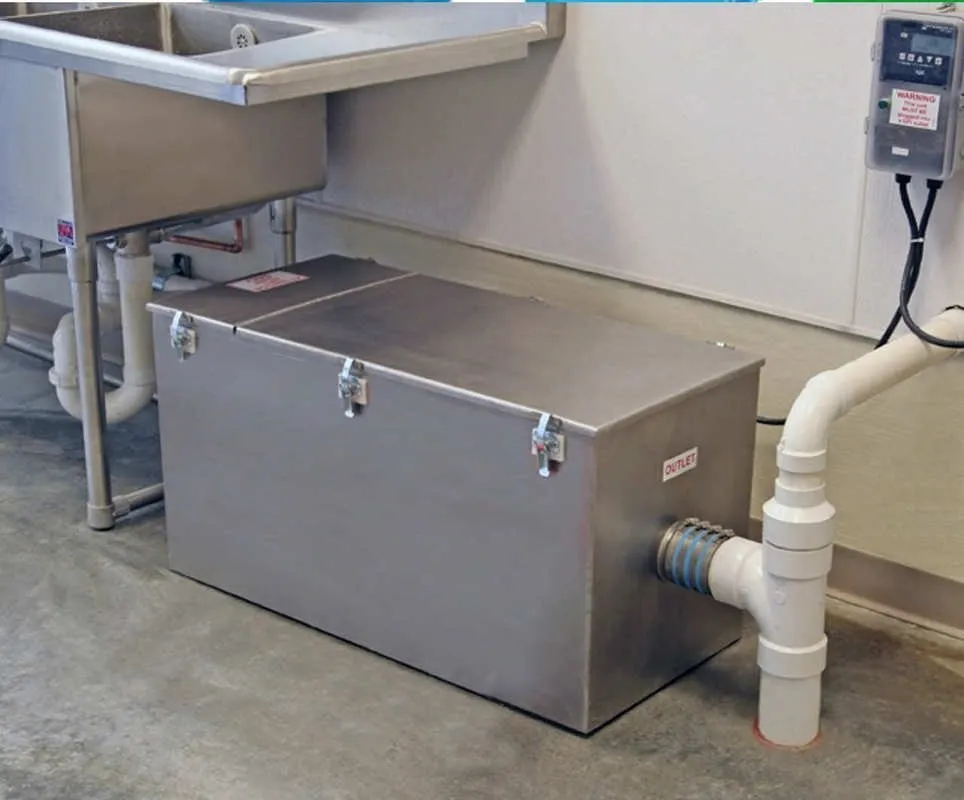
A failed seal, baffle or outlet pipe is usually a repair; a corroded, cracked or undersized trap is usually a replacement. What each job is priced on, what removal adds and the questions that make quotes comparable.
Whether a faulty grease trap is worth repairing or should be replaced depends on what has failed and whether the unit was ever the right size for the kitchen. A leaking lid seal, a loose baffle or a blocked outlet pipe is usually a repair. A corroded tank, a cracked body or a trap that keeps overflowing because it is too small for the kitchen is usually a replacement, and patching it only moves the cost to next month. This guide explains how each job is priced, what removal adds, and how to tell whether a quote is steering you the right way. For the work itself, our grease trap repair, installation and servicing page sets out what we cover.
What goes wrong with a grease trap?
Most faults are in the parts around the tank rather than the tank itself: the lid and its seal, the internal baffles, and the pipework in and out. Those are the cheaper faults to put right.
- Lid and seal. A worn or missing seal lets smells into the kitchen and can let water escape when the trap is full. It is often the first thing to fail on an under-sink unit that is opened every week.
- Baffles. The internal plates slow the water so fat can separate. If one is loose, bent or missing, fat passes straight through the trap and into the drain, and the trap looks fine from the outside.
- Inlet and outlet pipework. Joints work loose, pipes sag and outlets block with set fat. A slow-draining sink next to a trap that was emptied recently usually points here.
- The tank. Steel units corrode, particularly at welds and around the base. Plastic units can crack if they were knocked, overloaded with boiling water or badly supported.
- Automatic units. Automatic grease removal units add a motor, a skimming mechanism, a heater and a timer. Any of these can fail while the tank itself is sound.
How is a grease trap repair priced?
A repair is priced on labour by time band plus parts, and nearly always starts with emptying and cleaning the trap. An engineer cannot inspect baffles or seals in a tank full of fat and water.
That first step is the one people forget to budget for. Emptying and disposing of the contents is a line on the invoice in its own right, because the waste has to go to a licensed carrier. If the trap was serviced recently, say so when you book, because a clean trap takes far less time to inspect. After that, the labour depends on where the trap is. A unit under a sink with room around it is a short job. A separator under a kitchen floor or in a yard takes longer to open, inspect and close again. Parts are usually modest for seals and baffles and higher for automatic unit components. Our published rate card shows how labour is set by time band, so you can see what a repair done during trading hours costs against one done after the kitchen closes.
When is replacing a grease trap the better answer?
Replace the trap when the tank itself has failed, when parts are no longer made for it, or when it is too small for the kitchen it now serves. In each of those cases a repair is money spent on a unit you will replace anyway.
A corroded or cracked tank cannot be relied on to hold its contents, and a leak under a kitchen floor is a far bigger bill than the trap. The sizing question matters just as much. Many London kitchens have changed hands, menus and opening hours several times since their trap went in. A trap sized for a sandwich bar will not cope with a busy fryer menu, however many times its seals are replaced. The signs are a trap that fills between services, fat appearing in the chamber downstream, and blockages further along the drain. If that is your pattern, the useful quote is for a correctly sized unit, and our guide on how trap type and size shape an installation quote explains what that involves. Replacing a failed unit like for like makes sense only when the old one was the right size.
What does grease trap removal involve, and what adds to the cost?
Removal means emptying the trap, disconnecting it, taking it away and making good the drainage and the floor or surface it sat in. The cost depends mostly on where the trap is and what has to happen to the pipework afterwards.
An under-sink unit is lifted out and the waste reconnected. An in-ground separator is a different job: it has to be emptied by tanker, broken out or lifted, and the hole filled and reinstated to match the surface around it. The items that move the price are:
- Emptying and licensed disposal of whatever is in the trap, which is more for a large or neglected unit.
- Access. Floor tiles, concrete or block paving that have to be cut and relaid.
- Making good the drain. Reconnecting the kitchen waste to a new trap, or straight to the drain if no trap is needed.
- Hours. Work done outside trading hours to keep the kitchen open usually sits in a higher time band.
Removal with no replacement is the wrong answer for a kitchen still serving hot food. Letting fat into a public sewer is an offence under section 111 of the Water Industry Act 1991, and the sewerage company can trace a blockage back to the premises that caused it. Removing a trap outright is normally only right when the unit's use is changing, for example when a restaurant becomes a retail shop.
Can poor maintenance make a repair more expensive?
Yes. A trap that has not been emptied often enough takes longer to clear before any repair can start, and set fat speeds up wear on seals, baffles and automatic parts.
Neglect also hides the real fault. A trap that overflows because it is overdue for emptying can look like a trap that has failed, and a firm may quote to replace a unit that only needed a proper service. Before agreeing to a replacement, ask when the trap was last emptied and whether the engineer has seen it clean. Keeping collection paperwork on file helps here too. It shows the service history, and it is your evidence if a blockage in the sewer is ever blamed on your kitchen. Our guide to commercial kitchen grease trap maintenance covers how servicing is priced and what a visit should include.
How do you compare grease trap repair and replacement quotes?
Ask each firm the same questions and compare the itemised lines, not the totals. A cheap repair quote can include nothing but labour, and a replacement quote can include a larger unit you did not ask for.
- What exactly has failed, and did you see it with the trap empty?
- Is emptying and waste disposal included, and is it priced separately?
- If you recommend replacement, why is repair not worth it, and what size is the new unit based on?
- Does the price include removing the old unit and making good the floor or surface?
- Which time band is the work priced in, and can it be done outside trading hours?
A firm that answers all five before it arrives will give you an invoice that matches its quote. A single figure for "grease trap repair" or "supply and fit new trap" tells you very little. If you are unsure whether your trap needs a repair or a replacement, describe what it is doing when you get in touch and we will tell you which job to budget for before anyone visits.
Frequently asked questions
How do I know if my grease trap is broken or just needs emptying?
Empty and clean it first. A trap that overflows, smells or drains slowly is very often overdue for a service rather than faulty. If the problem comes back quickly after a proper clean, or the engineer finds loose baffles, a failed seal, leaks or corrosion with the trap empty, it needs a repair or replacement.
Is it cheaper to repair or replace a grease trap?
A repair to a seal, baffle or outlet pipe is usually cheaper than a new unit. It stops being the cheaper option when the tank itself is corroded or cracked, when parts are no longer available, or when the trap is too small for the kitchen, because the faults will keep coming back until the unit is replaced.
Can I remove a grease trap and not replace it?
Only if the kitchen no longer produces fat, oil and grease, for example after a change of use. A kitchen still serving hot food needs an effective way to keep fat out of the sewer, and discharging fat that obstructs a public sewer is an offence under the Water Industry Act 1991.