Grease Trap Installation Quotes: What You Pay For and Why
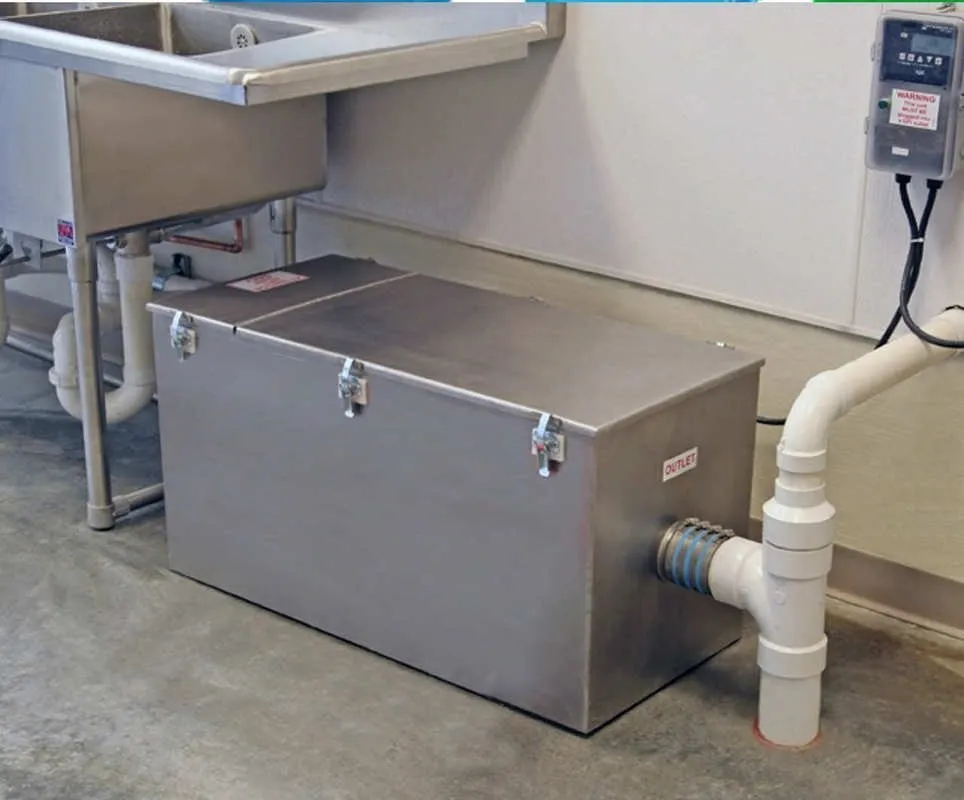
A grease trap price depends far more on which unit your kitchen needs and where it has to go than on the trap itself. How each type is sized, what adds cost and what it costs to run once fitted.
What a grease trap installation costs depends mainly on which type of unit your kitchen needs, where it has to go, and how much drainage work is needed to connect it. A small under-sink trap and a large in-ground interceptor are different jobs with very different prices, so the useful question is not "how much is a grease trap" but "which trap does this kitchen need, and what does fitting it involve". This guide answers both, and explains how to read an installation quote line by line.
Why do commercial kitchens need a grease trap at all?
Because putting fat, oil and grease into the public sewer is not allowed, and a kitchen that does it risks enforcement and the cost of clearing the blockages it causes. A grease trap is the equipment that stops it happening.
Under section 111 of the Water Industry Act 1991 it is an offence to discharge anything into a public sewer that is likely to interfere with its free flow. Fat from commercial kitchens is one of the main causes of sewer blockages in London, and the sewerage undertaker can trace a blockage back to the premises that caused it. Building Regulations guidance (Approved Document H) also expects drainage from commercial hot-food premises to include a grease separator or another effective means of removing grease. In practice, a new restaurant fit-out, a change of use to hot food, or a blocked drain traced to your kitchen are the usual moments a trap goes in.
Which type of grease trap does your kitchen need?
It depends on how much water and fat your kitchen puts through its drains at peak. Small kitchens can often manage with an under-sink unit; busy kitchens usually need a larger separator or an automatic unit.
- Passive under-sink traps. A tank fitted below a sink that slows the water so fat floats and is held back. The cheapest to buy and fit, but they need emptying often and only suit low volumes.
- Automatic grease removal units. These skim the separated fat off into a container on a timer, so staff empty a small pot rather than a whole tank. They cost more to buy and need power, but reduce ongoing servicing.
- Large in-ground separators. Installed below ground outside or under the kitchen floor, sized to the whole kitchen's flow. Used for high-volume kitchens, and the most expensive to install because they involve excavation.
- Dosing systems. Enzyme or bacterial dosing is sometimes sold as an alternative. It can help, but it is not a substitute for a correctly sized trap, and fat broken down in one pipe can re-form further down the line.
Sizing should be based on the flow rate of the fittings connected to the trap. The European standard for grease separators, BS EN 1825, sets out the method. A quote that names a unit without saying how it was sized is a quote to question.
What makes a grease trap installation cost more?
Location and connection work cost more than the unit in most jobs. The same trap can be a short job under a sink or several days of work where the floor or the yard has to be opened.
The items that move the price:
- The unit itself, which scales with capacity and whether it is passive or automatic.
- Where it goes. Under a sink with space is simple. In the ground outside means excavation, a base, backfill and reinstating the surface, which is priced very differently on soft ground than under concrete or block paving.
- Re-routing drainage. All the fat-carrying fittings need to pass through the trap, and older kitchens rarely have pipework laid out for that.
- Access and hours. Work that has to be done outside trading hours to keep the kitchen open usually falls in a higher time band.
- Removing an old unit, including emptying and disposing of its contents, if you are replacing rather than installing from scratch.
Each of those should appear as its own line. Our pricing page shows how we set out labour by time band so you can see where the hours sit.
Is it better to install a bigger trap than you need?
Not usually. A trap that is badly oversized can be as poor a buy as one that is too small, so the right answer is a correctly sized unit, not the largest one on offer.
An undersized trap fills quickly, lets fat pass through at busy periods and needs emptying so often that the servicing costs outrun the saving on the unit. An oversized one costs more to buy and fit, takes up more space, and can hold waste long enough to smell. If a quote recommends a much larger unit than your kitchen seems to need, ask for the sizing calculation. If a quote recommends a small under-sink unit for a busy kitchen with several sinks and a dishwasher, ask the same question the other way round.
What will the grease trap cost to run after it is installed?
Running costs are emptying, servicing and waste disposal, and over a few years they can exceed the installation price. Budget for them before choosing a unit, not after.
Passive traps need regular emptying, and how often depends entirely on how busy the kitchen is. Automatic units reduce that but still need servicing. Large separators are normally emptied by tanker. The fat removed is a waste that must be taken away by a licensed carrier, and you should get paperwork for each collection, because it is your evidence if a sewer blockage is ever traced back towards your premises. Our guide to commercial kitchen grease trap maintenance covers the servicing side, and grease trap servicing sets out what a visit includes.
How should you compare grease trap installation quotes?
Compare the unit, the sizing and the installation work separately. Two quotes can name the same trap and still describe very different jobs.
Ask each installer: what unit and capacity they propose and how they sized it; exactly which fittings will drain through it; whether excavation, reinstatement and old-unit removal are included; which time band the work is priced in; and what servicing the unit will need and at what interval. A quote that answers all five is one you can compare. One that gives a single total for "supply and fit grease trap" is not, however attractive the figure looks.
Frequently asked questions
Do I legally need a grease trap?
There is no single rule that names a specific unit, but discharging fat, oil and grease that obstructs a public sewer is an offence under the Water Industry Act 1991, and Building Regulations guidance expects commercial hot-food kitchens to have a grease separator or another effective means of grease removal. For most commercial kitchens, that makes a correctly sized trap the practical answer.
How long does a grease trap installation take?
An under-sink unit with suitable space and pipework can be a short job. An in-ground separator that needs excavation, a base, connections and surface reinstatement can take several days. Re-routing kitchen drainage to pass through the trap is often the part that takes longest.
Can I replace my grease trap with enzyme dosing?
Dosing can reduce build-up in pipes, but it is not a replacement for a correctly sized trap. Fat broken down by dosing can re-form further along the drain or in the sewer, so dosing is best treated as an addition to a trap rather than an alternative.