How Soakaway Size and Soil Change the Installation Bill
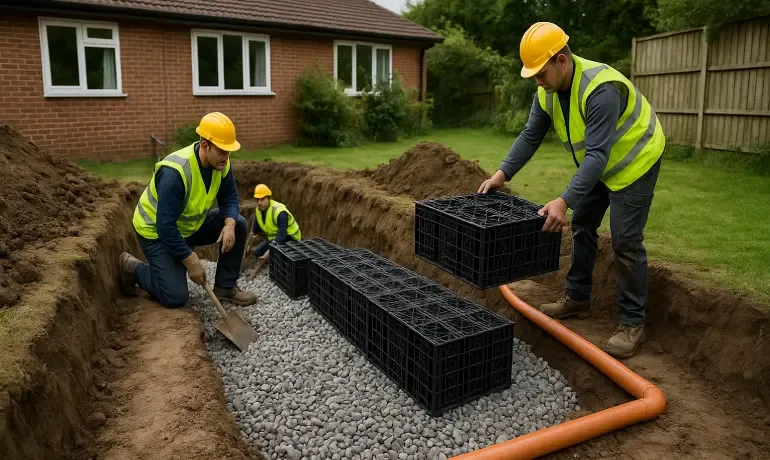
A soakaway price is set by the area it drains, how well your ground absorbs water and how hard the site is to dig and reinstate. Why London clay changes the maths, and when a soakaway is the wrong answer.
What a soakaway installation costs is decided mostly by three things: how large the soakaway has to be for the area draining into it, how well your ground absorbs water, and how hard it is to dig and reinstate the spot where it goes. Soil and size are fixed by the site, so the most useful thing you can do before asking for a price is understand them. This guide explains each cost driver, when a soakaway is not the right answer at all, and how to read a quote.
What is a soakaway, and what is it allowed to take?
A soakaway is an underground pit or chamber that collects rainwater and lets it soak slowly into the surrounding ground. It is for surface water only, such as water from roofs, patios and driveways, never for waste from toilets, sinks or washing machines.
Older London soakaways are usually holes filled with brick rubble or stone. Modern ones use plastic crates wrapped in a geotextile membrane, which hold far more water for the same size of hole and are less likely to silt up. When people search for soakaway costs they are usually pricing one of three jobs: a new soakaway for an extension or a new downpipe, a replacement for an old rubble pit that has stopped draining, or a clearance of one that is silted but still sound. They are priced very differently, and clearance is by far the cheapest if the soakaway can be saved. Our article on why soakaways stop draining helps you tell which you have.
How does the size of the soakaway affect the price?
Size drives the cost of excavation, materials and waste removal, so it is the largest single factor. The size needed depends on the roof or paved area draining into it and on how quickly your soil absorbs water.
Soakaways are normally designed using the method in BRE Digest 365, which uses a percolation test (digging a trial hole, filling it with water and timing how fast it drains) to work out the storage the soakaway needs. A large roof on slow-draining ground needs a much bigger soakaway than a small extension roof on free-draining ground. That is why a price given over the phone without any information about the area served or the soil is only a guess, and why a percolation test belongs on the quote for any new soakaway rather than being skipped to make the figure smaller.
Why does London soil matter so much?
Because a lot of London sits on clay, and clay drains water very slowly. On heavy clay a soakaway has to be much larger to work, and in some gardens it cannot work at all.
Much of central, north and east London is on London Clay, while parts of south and west London sit on gravels and sands that drain far more freely. On gravel a modest crate soakaway may do the job; on clay the same roof area can need several times the storage, which multiplies the digging and materials. Where a percolation test shows the ground barely drains, the honest advice is that a soakaway is the wrong answer, and money spent building one will be money spent on a tank that fills and stays full.
What else goes into a soakaway installation quote?
Beyond the soakaway itself, a quote should cover digging, connecting pipework, taking away spoil and putting the surface back. Those lines are often where two quotes differ most.
- Excavation. By hand in a tight back garden or by small digger where access allows. Narrow side passages in terraced houses often mean hand digging, which takes longer.
- Spoil removal. A soakaway produces a large volume of soil that has to go somewhere, usually in a skip or grab lorry.
- Connection pipework from the downpipes or channel drains, with a silt trap or inspection point so the soakaway can be checked later.
- Reinstatement. Returfing a lawn is cheap; relaying block paving or concrete is not.
- Removing the old soakaway, where a failed rubble pit is being replaced in the same spot.
Our rate card shows how we price labour by time band, and the soakaway installation page describes how we set out the rest.
Where can a soakaway go, and when do the rules add cost?
Building Regulations guidance says a soakaway should normally be at least five metres from a building, and it should not be placed where it could make the ground under a foundation unstable. On a small London plot that rule alone can decide whether a soakaway is possible.
If the only place that meets the distance is under a driveway or at the far end of a long garden, the pipe runs get longer and the reinstatement more expensive. Where a soakaway serves a new extension, building control will usually want to see that it has been sized and positioned properly. Approved Document H sets out an order of preference for rainwater: soak it into the ground first where that is practical, then a watercourse, then a sewer. So if the percolation test fails, connecting to a surface water sewer may be acceptable, but that needs the sewerage undertaker's agreement and is a separate cost.
How do you compare soakaway quotes?
Check that each quote is for a soakaway of the same size, sized the same way. If one firm has done a percolation test and another has not, you are not comparing like with like.
Ask each firm: what area is draining into the soakaway and what storage volume they have allowed; whether a percolation test is included; whether it is rubble or crates; how spoil is removed; what surface is being reinstated and how; and whether a silt trap or inspection access is included. A low quote for a soakaway that is too small for your ground is not a saving. It is the same job again in a few years, plus the flooded patio in between.
Frequently asked questions
Do I need a percolation test before installing a soakaway?
For a new soakaway, yes. The test shows how quickly your ground absorbs water, and the soakaway's size is calculated from it. Without it, a soakaway may be built too small for the ground and fill up in heavy rain.
Is it cheaper to clear an old soakaway than replace it?
Usually, if the soakaway is silted but structurally sound. If a rubble soakaway has collapsed, is blocked with fine silt all through, or was too small for the area draining into it, clearing it only postpones the problem and replacement is the better spend.
Can I connect a downpipe to the sewer instead of building a soakaway?
Building Regulations guidance prefers rainwater to go into the ground first, then a watercourse, then a sewer. If a percolation test shows your ground does not drain, a connection to a surface water sewer may be acceptable, but it needs the sewerage undertaker's agreement.