How Much Does Septic Tank Emptying Cost? What Sets the Price
What you pay to empty a septic tank or cesspit is set by the volume removed, the type of system, tanker access and how overdue the tank is. How to read a quote, what it should include, and why frequency matters more than the price per visit.
How much septic tank emptying costs depends mainly on three things: how much waste has to be removed, what kind of system you have, and how easily a tanker can get to it. A standard household septic tank with a lid a short hose run from the road is a routine visit. A cesspit at the end of a long garden, or a tank that has not been emptied for years and has formed a hard crust, is a longer job with a higher price. Our standard rates by service and time band are on the published rate card; this page explains what sits behind them.
What decides the cost of emptying a septic tank?
Volume, system type and access set most of the price. Timing and the condition of the tank set the rest.
Volume matters because the tanker has a fixed capacity and every load has to be taken to a licensed treatment site. A small tank is one short visit. A large tank, or two chambers that both need emptying, may take more tanker capacity and more time on site.
System type matters because a septic tank, a cesspit and a sewage treatment plant hold different amounts and need different work. That is covered in the next section.
Access is the cost driver people underestimate, especially in London. It has its own section below.
Timing works the same way as the rest of our rate card: standard hours, evenings and night are priced separately. Emptying is almost always a job that can be booked ahead, so a planned slot in standard hours is usually the cheapest option unless the tank is already overflowing.
Septic tank, cesspit or treatment plant: why the price differs
A cesspit is usually the dearest to keep, because it holds everything and has to be emptied far more often. A septic tank and a treatment plant only need the settled sludge removed, so visits are less frequent.
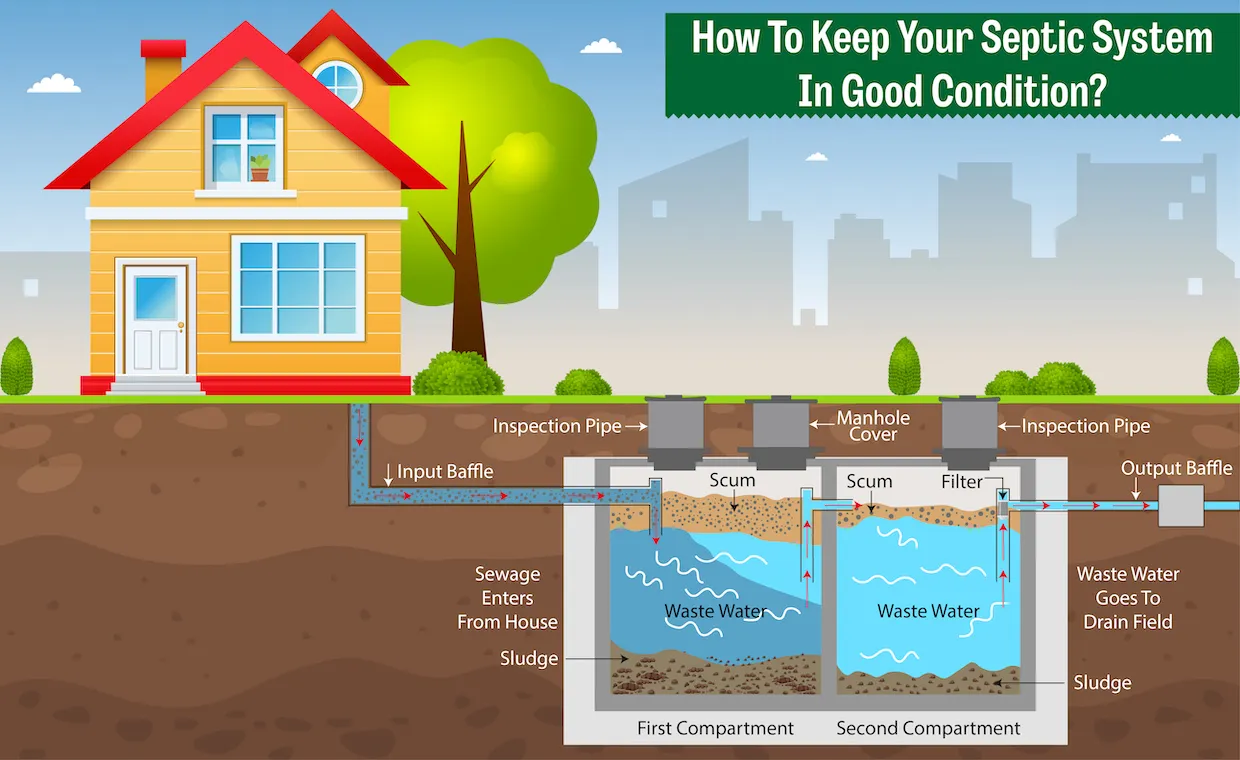
Septic tank. Solids settle in the tank and the liquid runs out to a drainage field or soakaway. Emptying removes the sludge and scum that build up, typically once a year for an average household, depending on tank size and how many people live there.
Cesspit or cesspool. A sealed tank with no outlet. Everything that goes down the drains stays there until it is pumped out, so it fills in weeks or months rather than a year. Each visit may cost about the same as a septic tank visit, but there are many more of them.
Sewage treatment plant. A tank with a pump or aerator that treats the waste before discharge. It needs desludging like a septic tank, and it also needs the mechanical parts serviced, which is a separate job from emptying.
If you are not sure which you have, tell whoever you call how the system is laid out, where the lids are, and whether there is an outlet pipe. It changes how the job is priced.
Access is the hidden cost driver in London
The closer and easier the tanker can park to the tank, the cheaper the job. Long hose runs, narrow lanes and buried lids all add time.
Tankers are large vehicles. Properties on narrow lanes, private roads with weight limits, or plots where the tank sits behind the house can mean a longer hose run, a smaller vehicle, or both. A smaller vehicle carries less, which can mean more trips for the same tank.
The lid matters too. A lid that has been covered by a lawn, a patio or planting has to be found and uncovered before emptying can start. A lid that has seized or cracked may need freeing or replacing. Knowing where your lids are, and clearing them before the visit, is one of the simplest ways to keep the price down.
When you ask for a quote, give the distance from the nearest place a tanker can stop to the tank, and mention gates, steps or soft ground. Quotes given without that information are guesses.
What a fair emptying price should include
A fair price should cover the full desludge of every chamber, lifting and replacing the lids, disposal at a licensed site, and a waste transfer note. If any of those are extra, the quote should say so up front.
The waste transfer note is not paperwork for its own sake. As the person producing the waste, you have a legal duty of care to make sure it goes to someone authorised to take it. The company emptying your tank should be a registered waste carrier, and the note records where the waste went. Keep it.
A brief visual check of the inlet and outlet while the tank is empty is worth asking for. It is the one time you can see whether pipes are blocked, the baffles are intact or the tank walls are cracked. Our septic tank and cesspit emptying service includes that check as standard, with anything found reported and quoted separately rather than added to the bill.
What pushes the price up
Overdue tanks, blocked pipes and emergency timing are the usual reasons an emptying bill is higher than expected. All three can normally be seen coming.
An overdue tank. Sludge left for years compacts and the scum layer hardens. Breaking it up and removing it takes longer, and sometimes water has to be added to make it pumpable.
Blocked inlet or outlet pipes. If the pipe into the tank or out to the drainage field is blocked, clearing it is separate work, usually rodding or high-pressure jetting, and it should be quoted as its own line.
A failing drainage field. If the tank refills quickly after emptying, the problem may be the soakaway or drainage field, not the tank. Emptying more often treats the symptom and costs more over the year.
Emergency timing. A tank that is already backing up into the house has to be dealt with in whatever time band it happens. Regular emptying is what keeps you out of that position.
How often you empty it matters more than the price per visit
The cheapest septic tank is one emptied on a regular schedule. Leaving it too long raises the cost of the next visit and risks solids escaping into the drainage field, which is far dearer to put right.
For septic tanks and treatment plants in England that discharge to the ground or a watercourse, the Environment Agency's general binding rules expect the sludge to be removed regularly, and at least once a year unless the manufacturer's instructions say otherwise. A cesspit needs emptying whenever it is nearly full, which for a busy household can be every few weeks. Our septic tank maintenance checklist covers the other checks worth doing between visits.
How to compare two emptying quotes
Compare what each quote covers, not only the headline number. A low price per visit that excludes disposal, a second chamber or the hose run is not the cheaper option.
Ask each company the same questions. Is the price for the whole tank, or per load or per volume? Does it include every chamber? Is disposal included? How far can the hose reach from where the tanker will park? Is VAT included? Will I get a waste transfer note? Is there a different rate for evenings or weekends?
If you want a confirmed figure before anyone travels, send us the tank type, its rough size if you know it, where it sits in relation to the road and when it was last emptied, and we will tell you which rate applies.
Frequently asked questions
How often does a septic tank need emptying?
For most households, about once a year, although it depends on tank size and how many people use it. In England, the Environment Agency's general binding rules expect sludge to be removed at least annually unless the manufacturer says otherwise. A cesspit has no outlet and needs emptying whenever it is nearly full, which is usually much more often.
Why is emptying a cesspit more expensive than a septic tank?
Each visit can cost a similar amount, but a cesspit holds all the waste water from the property and has no outlet, so it fills far faster. Over a year you pay for many more visits. A septic tank only needs the settled sludge removed, so it is emptied much less often.
What paperwork should I get after a septic tank is emptied?
You should receive a waste transfer note recording what was removed and where it was taken, from a company registered as a waste carrier. As the producer of the waste you have a duty of care to make sure it is disposed of legally, so keep the note with your property records.