Drainage Search vs Drain Survey: What Each Costs and Tells You
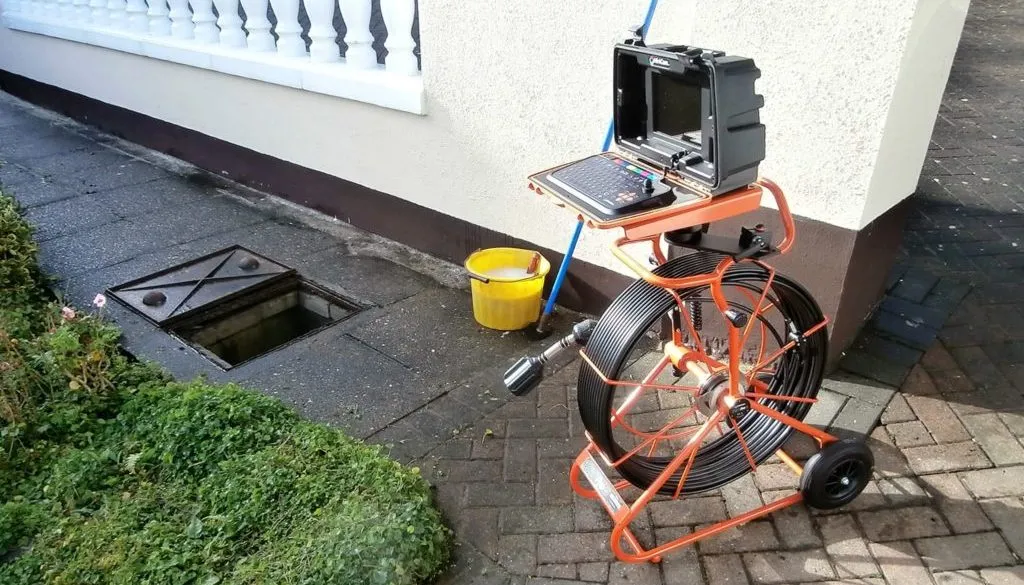
The drainage and water search your conveyancer orders shows what a house is connected to; a CCTV drain survey shows what state the pipes are in. What each one costs you, what it answers and when paying for both makes sense.
A drainage search and a drain survey cost different amounts because they answer different questions. The drainage and water search, usually called a CON29DW, is a desk report from the water company's records that your conveyancer orders as part of the standard searches. A drain survey is a camera inspection of the actual pipes at the property. The search tells you what the property is connected to; the survey tells you what condition the drains are in. Most buyers pay for the first without choosing to. Whether the second is worth its fee depends on the house. Our own survey price sits on the published rate card; this guide explains what each one buys you so you can decide whether you need both.
What is a drainage search and what does it cost?
A drainage search is a fixed-fee report from the water company's records, ordered by your conveyancer before exchange. Its price is set by whoever supplies it, and it normally appears as a disbursement on your conveyancing bill alongside the local authority and environmental searches.
In London the records come from Thames Water, either directly or through a search provider that resells the report. Because the fee is set by the provider and not negotiated job by job, there is little point shopping around for it. The useful thing to check is that your conveyancer has actually ordered it and that the report has come back before you exchange contracts.
What does a drainage and water search tell you?
It tells you where the property's waste and rainwater go, and whether a public sewer runs through the land. It does not tell you whether any pipe is cracked, blocked or collapsed.
A typical CON29DW answers questions such as:
- Whether foul water drains to a public sewer.
- Whether surface water drains to a public sewer, which affects the sewerage part of the water bill.
- Whether a public sewer is recorded within the boundary, with an extract of the sewer map.
- Whether there is a build-over agreement for any structure built over or near a public sewer.
- Whether the property is on the register of homes at risk of internal sewer flooding.
- Whether the water supply is metered and which company supplies it.
Those answers matter. A public sewer under the garden can limit where you extend later, and a missing build-over agreement for an existing extension is worth raising with the seller's solicitor. The limit is that everything comes from records. Private drains that serve only the house are usually not on any map, and the search says nothing about their condition.
What does a drain survey show that the search cannot?
A drain survey shows the inside of the private drains. An engineer puts a camera through the pipes from the inspection chambers and records cracks, displaced joints, root intrusion, sagging sections and blockages.
This is the part a search can never cover, and it is where the expensive surprises sit. Victorian and Edwardian houses across London still drain through clay pipes laid over a century ago, and a displaced joint or a root-filled section is invisible from the garden until it blocks or subsides. A survey report with footage and a written summary lets you ask the seller to repair, reduce the price or cover the work before completion. Our guide on what a CCTV drain survey costs explains how survey prices are built and what the report should include.
Do you need both a drainage search and a drain survey?
You will almost always get the search, because conveyancers order it as standard and most mortgage lenders require the usual searches. The survey is optional, and whether it is worth paying for depends on the age of the house, the length of the drain run and what the search reveals.
A survey is usually worth it when:
- The house is older and still likely to have its original clay drains.
- There are large trees near the drain run.
- The search shows a public sewer within the boundary or near an extension.
- An extension, conservatory or patio has been built over the drains.
- The seller mentions past blockages, or the chambers show signs of standing water.
It is usually the wrong spend for a flat in a large block with no private drain of its own, where the drains are the freeholder's responsibility, or for a recent build whose drains may still be covered by a new-home warranty; check what the warranty includes first. If you are unsure, our guide on whether to get a drain survey when buying a house sets out when it pays for itself.
Who pays for each one when buying a house?
The buyer normally pays for both. The drainage search is part of the conveyancing disbursements; the drain survey is booked and paid for by the buyer, with the seller's permission to access the property.
Where a survey finds a defect, the cost of fixing it becomes a matter for negotiation. Buyers commonly ask for a price reduction based on a written repair quote, ask the seller to carry out the repair before completion, or agree a retention held back until the work is done. Each of these needs the survey footage and a separate itemised repair quote, which is why a survey report should never be bundled into a repair price. If the defect sits on a pipe that transferred to Thames Water in 2011, neither buyer nor seller pays for it; the report should say where your responsibility ends.
How do you avoid paying twice for drain information?
Read the search before booking the survey, and give the surveyor a copy. The sewer map and connection answers save time on site and help the engineer focus on the private pipes.
If the search shows no public sewer within the boundary and the house is modern, you may decide the survey is not needed. If it shows a sewer running close to an extension, ask the surveyor to include that section. Where the route of the private drain is unknown, drain tracing can map it at the same visit rather than as a second call-out. Asking for all of this in one written quote is the simplest way to avoid paying for the same visit twice.
Frequently asked questions
Is a drainage search the same as a drain survey?
No. A drainage and water search (CON29DW) is a desk report from the water company's records showing connections, recorded public sewers and build-over agreements. A drain survey is a CCTV inspection of the pipes at the property that shows their condition. The search cannot tell you whether a private drain is cracked or blocked.
Who orders the drainage search when buying a house?
Your conveyancer normally orders it as part of the standard searches, and the fee appears as a disbursement on your conveyancing bill. You do not usually need to arrange it yourself, but it is worth checking it has come back before you exchange contracts.
Can a drain survey replace the drainage search?
No. The survey shows the condition of the pipes it can reach, but it does not confirm legal connections, sewer map records, build-over agreements or sewer flooding risk. Most buyers need the search regardless, and add a survey when the age of the house or the search results give a reason to.